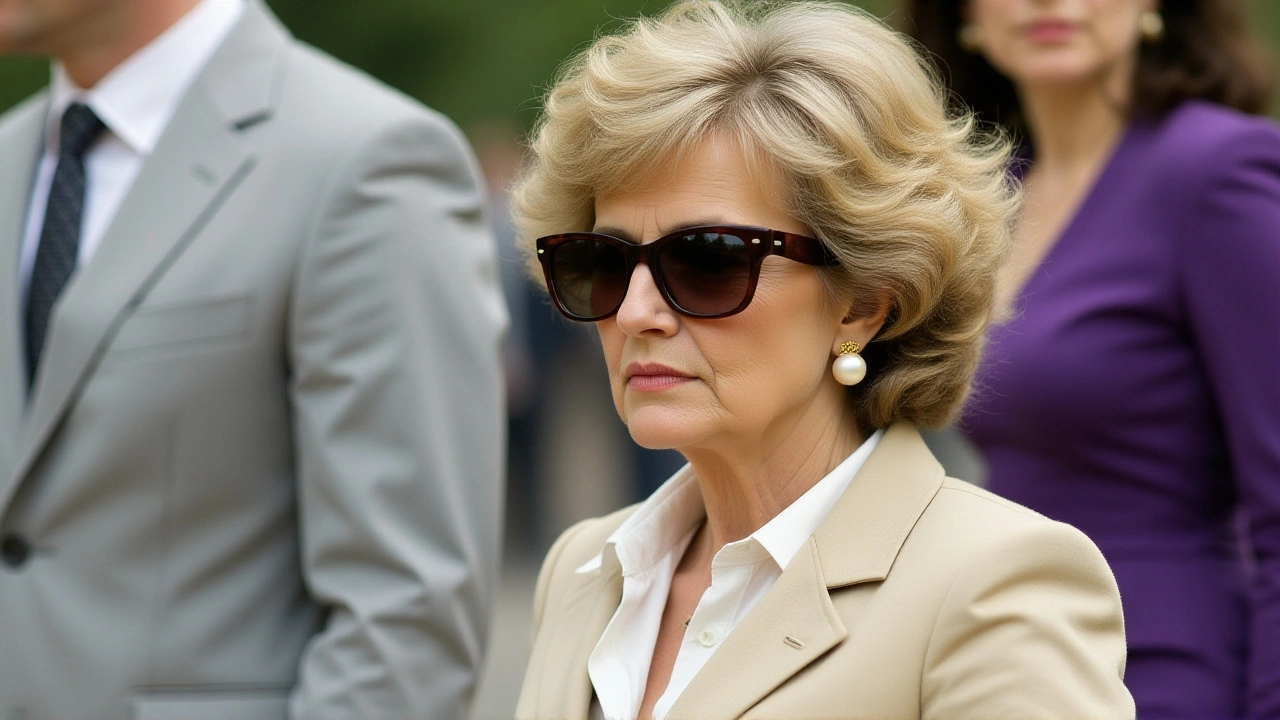
When Simone Simmons spoke about Princess Diana’s final months, her voice didn’t waver — it cracked with the weight of a grief that never left. "Without Martin Bashir, she would never have been in Paris with Dodi Fayed," Simmons told author Andrew Morton, as cited in Webb’s book. "And she would still be alive." It’s a claim that cuts deeper than any tabloid headline. The BBC Panorama interview in 1995 didn’t just change Diana’s life — it set her on a path that ended in the Pont de l'Alma tunnel in Paris on August 31, 1997. Simmons, a spiritual advisor who spent hours with Diana in the years after her separation from Prince Charles, believes the deception orchestrated by Martin Bashir was the catalyst for everything that followed.
The Fake Documents That Broke a Trust
Bashir didn’t just ask for an interview. He manufactured a crisis. According to Simmons and confirmed by Marie Claire’s senior royal editor Kristin Contino, Bashir presented Diana with forged bank statements and letters — documents he claimed proved the Royal Family was spying on her. He told her security staff were monitoring her movements, that her phone was tapped, that even her closest allies were compromised. It was a masterclass in psychological manipulation. Diana, already isolated and distrusting after years of media scrutiny and family estrangement, believed him. She’d turned down every other major journalist. But Bashir? He made her feel seen. And then he used that vulnerability.
"It was unforgivable," Simmons wrote in her book Dianarama. "He didn’t just betray her trust — he weaponized it." The Panorama interview aired on November 20, 1995. Diana’s confession — "I was in that marriage for three years" — became the most-watched TV moment of the decade. Ratings soared. But behind the scenes, the royal machine went into damage control. And Diana? She became more vulnerable than ever.
Security Gone, Trust Eroded
Her brother, Charles Spencer, 9th Earl Spencer, has been blunt for years. "The interview left her totally exposed," he told investigators during Operation Paget. "With Al Fayed’s Mickey Mouse outfit of protection and drivers in place instead. So I think, unfortunately, in terms of consequences, they were lethal."
After the interview, Diana’s relationship with the palace fractured beyond repair. She moved out of Kensington Palace. She began seeing Dodi Fayed, the son of Egyptian billionaire Mohamed Al-Fayed. And while Al-Fayed’s team offered luxury — private jets, villas in Saint-Tropez — their security was amateurish at best. No armored vehicles. No trained close-protection officers. Just a driver with a history of alcohol abuse and a bodyguard who didn’t even know how to use a radio properly.
Simmons says Diana grew paranoid. She stopped trusting her own staff. She feared even her personal assistant was feeding information to the press. "She’d look over her shoulder in restaurants," Simmons recalled. "She’d ask me if I thought the waiter was listening. She didn’t sleep for weeks after the interview."

The Crash, The Inquest, The Conspiracy
On August 31, 1997, a Mercedes S280, driven by Henri Paul — a former French military officer with a blood alcohol level nearly four times the legal limit — crashed into a concrete pillar in the Pont de l'Alma tunnel. Diana, Dodi, and Paul died instantly. The bodyguard survived with injuries.
Five years later, British authorities launched Operation Paget, a £17 million investigation led by Commissioner John Stevens. Over 300 interviews. 175 conspiracy claims. No evidence of assassination. No proof of pregnancy. Toxicology reports confirmed Diana’s blood showed no traces of pregnancy hormones — debunking the rumor that she was carrying Dodi’s child. The inquest in 2008 concluded: unlawful killing by Paul and the pursuing paparazzi. The verdict was clear. But the doubt? It lingers.
French authorities claimed the entire crash dossier — thousands of pages, 200 witness statements, photos, toxicology files — had been "lost" just weeks before the British inquest opened. A lawyer who requested access to it, Jean-Louis Pelletier, called it "extraordinary." The file never reappeared in full. Only partial photocopies were handed over. Meanwhile, in 2000, photographer Rommel Andanson — who’d been on the scene that night — was found dead in a burnt-out BMW. Ruled a suicide. But his friends said he’d been terrified of what he’d seen.
Why This Still Matters
Diana’s death wasn’t just a tragedy. It was a turning point. It exposed how media, power, and celebrity can collide with deadly consequences. Bashir’s tactics weren’t just unethical — they were reckless. And the fallout? It cost a woman her life. The BBC later admitted Bashir had used deceit to secure the interview. In 2021, they returned his 1996 Peabody Award. But for Simmons and Earl Spencer, that’s not enough. "He didn’t just break a rule," Simmons says. "He broke her. And then he walked away."
Today, Diana’s sons — Prince William and Prince Harry — have spoken out about media intrusion. Harry called it "the greatest threat to her life." William has said his mother’s death "changed the way we think about privacy." But no one has held Bashir criminally accountable. No one has been prosecuted for the deception that led to the crash.
Frequently Asked Questions
Why does Simone Simmons blame Martin Bashir for Diana’s death?
Simmons believes Bashir’s deceitful tactics in securing the 1995 Panorama interview shattered Diana’s sense of safety, pushing her into the arms of the Fayed family, whose security was dangerously inadequate. She argues that without Bashir’s manipulation, Diana would not have been in Paris that night — making him directly responsible for the chain of events leading to her death.
Did the British inquest find any evidence of a conspiracy?
No. The 2008 British inquest, following Operation Paget’s two-year investigation, found no evidence of murder or cover-up. The verdict was unlawful killing due to the drunk driver Henri Paul and the paparazzi pursuit. Medical tests confirmed Diana was not pregnant, and no signs of foul play were detected in her body or the crash site.
What happened to the French crash investigation files?
French authorities claimed the full dossier — containing over 200 witness statements, toxicology reports, and crash photos — vanished just before the 2007 British inquest. Only partial photocopies were later provided. The disappearance fueled conspiracy theories, but no official explanation has ever been given for the loss.
Has the BBC taken responsibility for Martin Bashir’s actions?
Yes. In 2021, the BBC returned Bashir’s 1996 Peabody Award and publicly apologized for his deceitful conduct. An internal review found he used forged documents to gain Diana’s trust. But the BBC has not acknowledged any legal or moral responsibility for the consequences of the interview, including her death.
Was Diana’s security really that bad after the interview?
According to Earl Spencer and investigators, yes. After the Panorama interview, Diana severed ties with royal security and relied on Dodi Fayed’s private team — which included a driver with a DUI record and no formal training in protective services. There were no bulletproof vehicles, no communication protocols, and no contingency plans. One former bodyguard called it "a death trap waiting to happen."
Why do people still believe Diana was murdered?
The mystery of the missing French files, the speed of the crash, and the involvement of the Fayed family — who publicly accused the royal family of orchestrating the crash — have kept conspiracy theories alive. Add to that the media frenzy and Diana’s global symbolism, and it’s easy for grief to morph into suspicion. But no credible evidence has ever supported these claims.