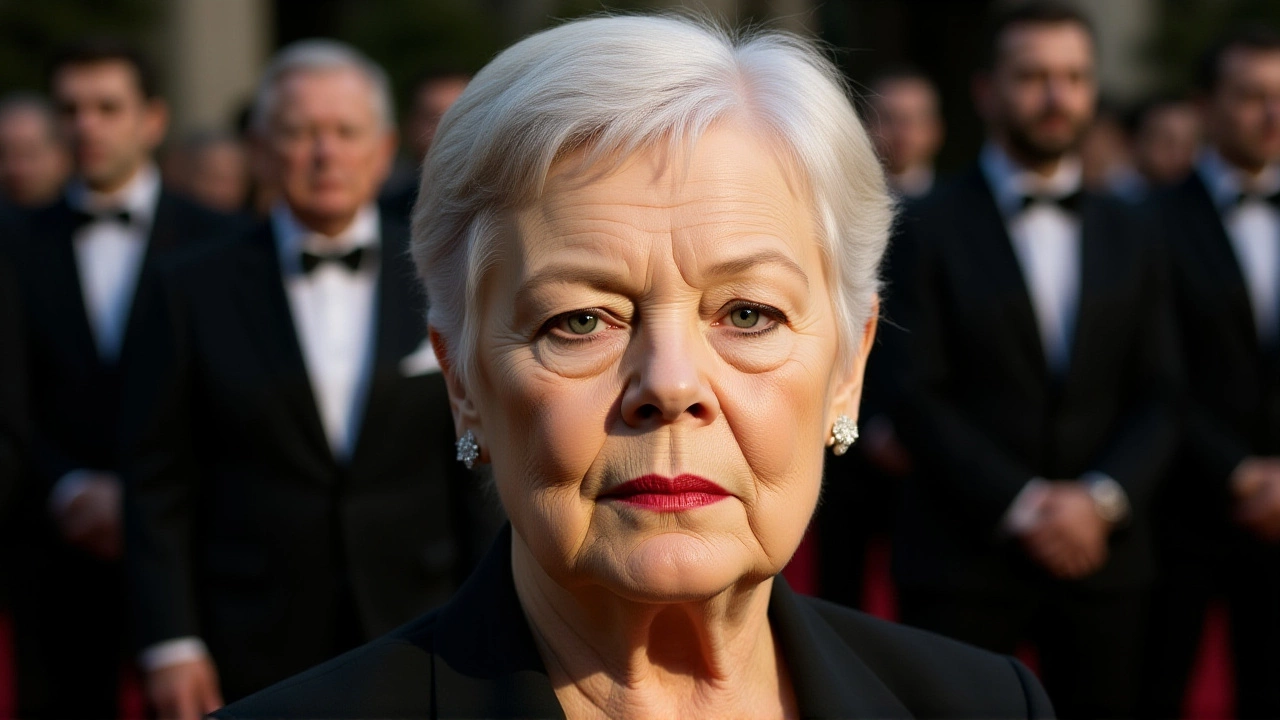
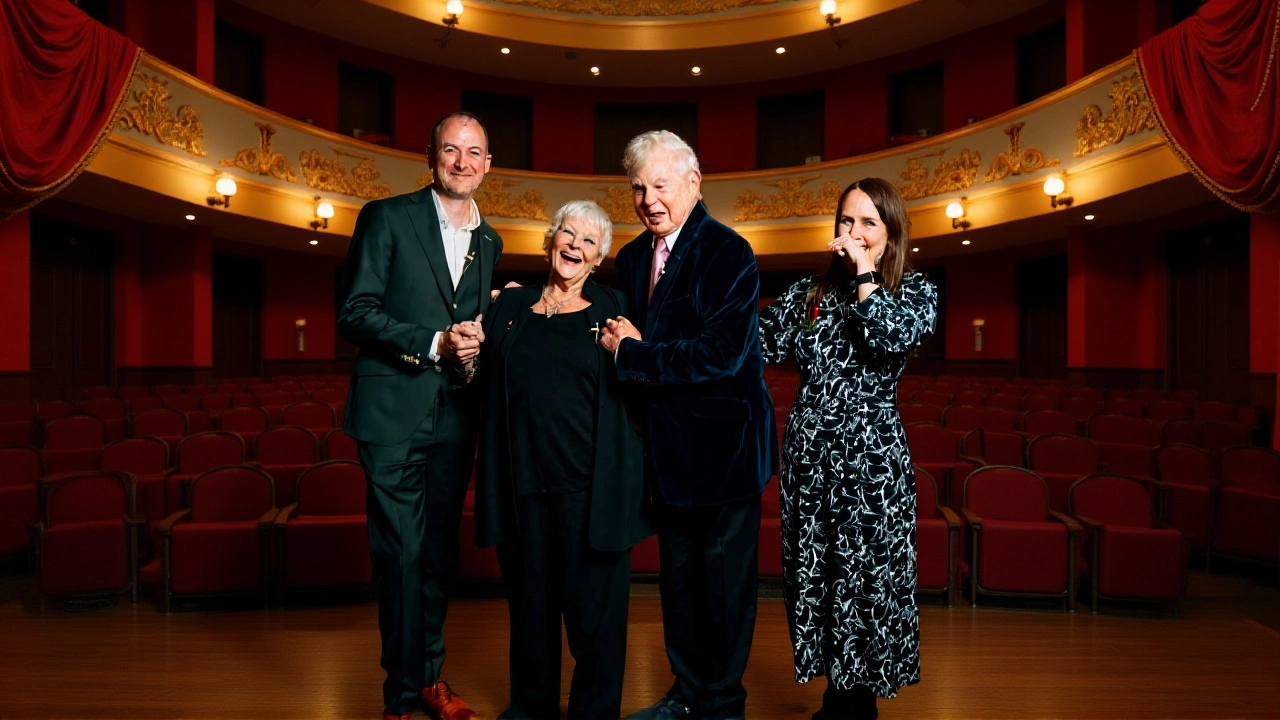
At 91, Judi Dench isn’t slowing down — she’s sharpening her critique. Speaking during coverage of The Stage Debut Awards 2025London, the Oscar-winning actress delivered one of her most pointed remarks yet: today’s young performers have no kind of discipline. It’s not just about talent, she argued. It’s about respect — for the craft, for the history, for the actors who built the foundations before them. And according to The Stage, the London-based theatre newspaper that hosted the awards, Dench blamed television culture for breeding apathy, not ambition.
The Legacy They’re Ignoring
Dench didn’t pull punches. She called out a generation of actors who chase instant fame on screen while ignoring the rich, demanding tradition of live theatre. Her words echoed back to 2009, when she told the Cheltenham Literature FestivalCheltenham audience that young performers showed "an apathy" and "laziness" toward theatre’s heritage. Back then, she lamented that most didn’t know who John Gielgud was — let alone why his Ophelia mattered. In 2017, The Statesman quoted her saying simply: "They’re just not curious." And now, in 2025, the sentiment hasn’t softened. It’s hardened.
She recalled her own early days at the Old Vic in 1957, playing Ophelia opposite John Neville’s Hamlet. Reviewers questioned whether a fresh graduate from the Central School of Speech and Drama deserved to be on that stage. She didn’t retreat to her dressing room. She stood in the wings — watching, absorbing, learning from every move, every breath, every pause of the veterans around her. "There’s always something to learn," she told The Telegraph in 2009. "It’s so exciting to read about the history of other people in the part."
A Culture of Instant Gratification
What’s changed? The speed. The noise. The screen. Today’s actors grow up with TikTok edits, Instagram reels, and casting calls that demand viral appeal before they’ve mastered a Shakespearean sonnet. Dench sees this as a cultural erosion. "They want to make a big impression in television or film straight away," she said in 2009 — a line that now reads like prophecy. The The Stage Debut Awards 2025 honored rising stars, but Dench’s remarks cast a shadow. Are these winners being trained, or just marketed?
She doesn’t blame them entirely. She blames the system. "Television culture produces actors with no kind of discipline," she told The Stage. It’s not that young performers lack skill — many are technically brilliant. But discipline isn’t just about hitting your mark. It’s about showing up early. Listening. Learning from those who’ve done it before. It’s about the silence between lines — something no algorithm can teach.
Voices From the Shadows
Dench isn’t alone. In 2023, Paste Magazine noted that Dame Emma Thompson and Sir Michael Caine echoed similar concerns about Hollywood’s "social media-friendly actors." Caine once said he’d rather work with a "good, slow actor" than a "fast, flashy one." Thompson has spoken about losing the art of stillness — of letting a silence breathe. But Dench is different. She doesn’t just complain. She remembers.
She remembers the Old Vic’s dusty backstage, the smell of old velvet curtains, the way John Neville would stand in the wings, not speaking, just watching. She remembers being told, "How dare you?" — and letting that sting fuel her. She remembers the nights she didn’t sleep because she was reading Shaw, Chekhov, or the diaries of Sybil Thorndike. That’s the discipline she’s mourning.
What’s Next for British Theatre?
The backlash is already brewing. In 2021, Whatsonstage.com published a rebuttal titled "Judi Dench is wrong, young actors learn from living greats not dead legends." The argument? Why study Gielgud when you can shadow a current Olivier winner? Why read old scripts when you can learn from a masterclass on YouTube?
But Dench’s point isn’t about replacing mentors — it’s about deepening them. She doesn’t want young actors to mimic the past. She wants them to understand it. To stand on its shoulders, not skip over it. The The Stage Debut Awards 2025 winners may now carry the weight of her critique. Will they watch? Will they listen? Or will they scroll past?
Why This Matters Beyond the Stage
This isn’t just about theatre. It’s about what happens when history becomes optional. When institutions like the National Theatre — which Dench helped shape in its early years — are treated as relics rather than living traditions. When young creatives believe innovation means ignoring context. When the art of listening becomes a relic.
Dench’s career spans 70 years. She’s seen revolutions — from black-and-white TV to streaming algorithms. But she’s never seen a generation so disconnected from the roots of their craft. And that’s what scares her. Not the rise of new media. But the fall of reverence.
Frequently Asked Questions
Why does Judi Dench care so much about theatre history?
Dench’s entire career was shaped by the Old Vic and the National Theatre’s early days, where learning came from observation, not instruction. She studied under actors who had performed with Ellen Terry and Henry Irving — figures who defined British theatre. For her, history isn’t nostalgia; it’s training. Without understanding the lineage of a role, she believes actors risk performing empty gestures instead of living truths.
Is Dench’s criticism fair to today’s young actors?
It’s harsh, but not unfounded. Many young actors today are trained in highly technical, screen-focused programs that prioritize camera presence over stagecraft. But Dench isn’t rejecting modern training — she’s asking for balance. The best actors, she says, combine technical skill with emotional depth, and that depth comes from knowing the weight of the roles they inherit — not just how to deliver a line for a close-up.
What’s the difference between learning from "living greats" versus "dead legends"?
The debate centers on relevance. Critics argue that watching a current Olivier Award winner rehearse is more useful than reading 1940s diaries. Dench counters that the "dead legends" — like Gielgud, Olivier, or Thorndike — established the grammar of performance. Their choices, failures, and breakthroughs became the blueprint. You don’t have to imitate them, but you should know why they mattered. Otherwise, you’re reinventing a wheel that’s already been perfected.
How has the National Theatre responded to Dench’s views?
The National Theatre hasn’t issued a formal statement, but its training programs have quietly doubled down on historical context. New intake students now study archival footage of 1960s productions alongside modern digital techniques. One recent curriculum update included mandatory viewing of Dench’s 1969 performance in "The Cherry Orchard" — not as a model, but as a benchmark of emotional precision.
Are other veteran actors still speaking out like Dench?
Yes. Sir Ian McKellen has called the "celebrity actor" a "dangerous myth," while Dame Helen Mirren has said she refuses to audition for roles where the casting brief mentions "Instagram followers." But Dench remains the most consistent voice — not because she’s angry, but because she remembers what it cost her to earn the right to be heard on stage. And she’s not letting that legacy fade quietly.